I-D Magazine
2023
Photography | Graphic Design
Fashion Photography
University assignment
A theoretical fashion magazine featuring Britpop fashion and 90s British youth culture.
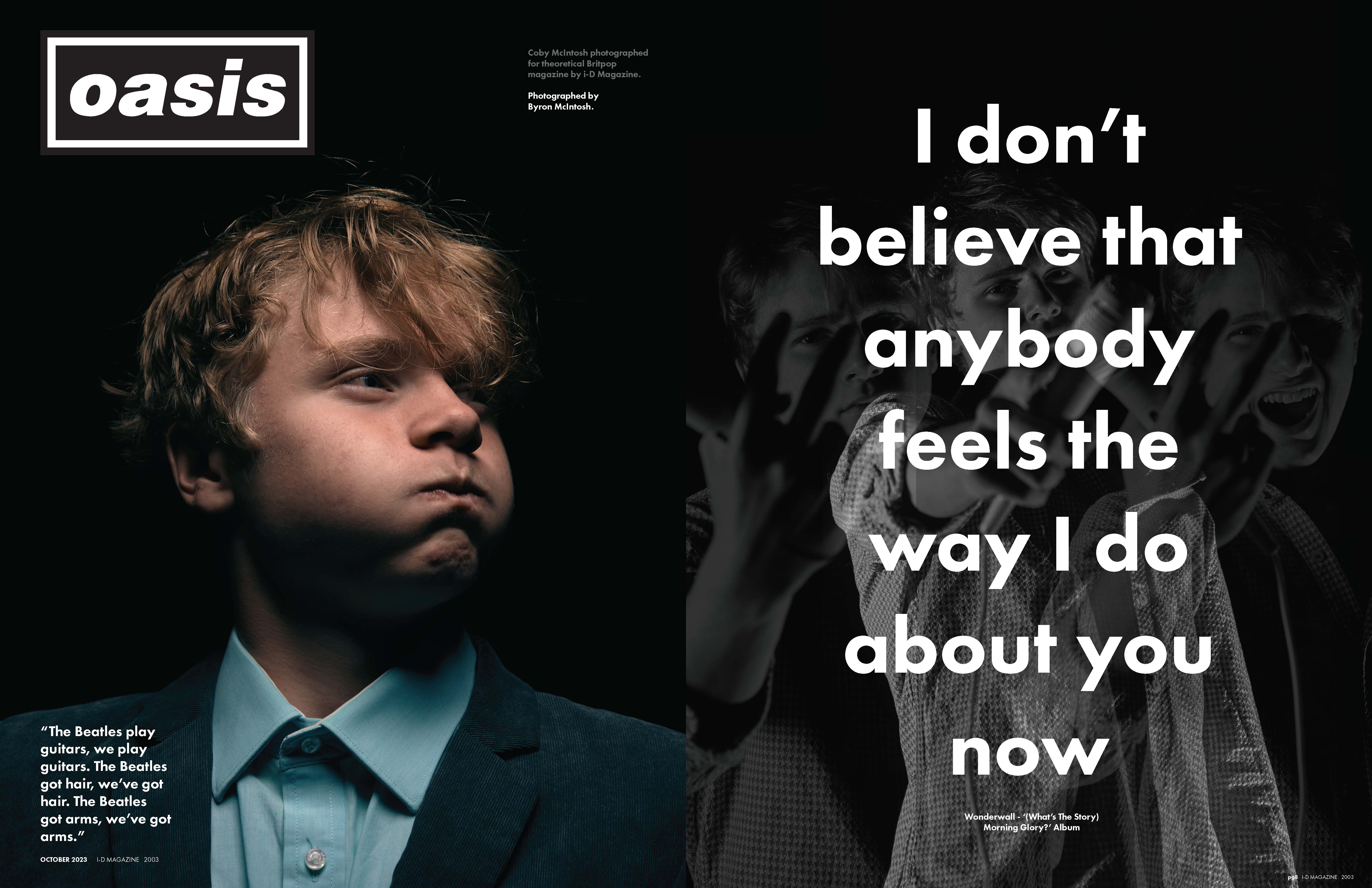
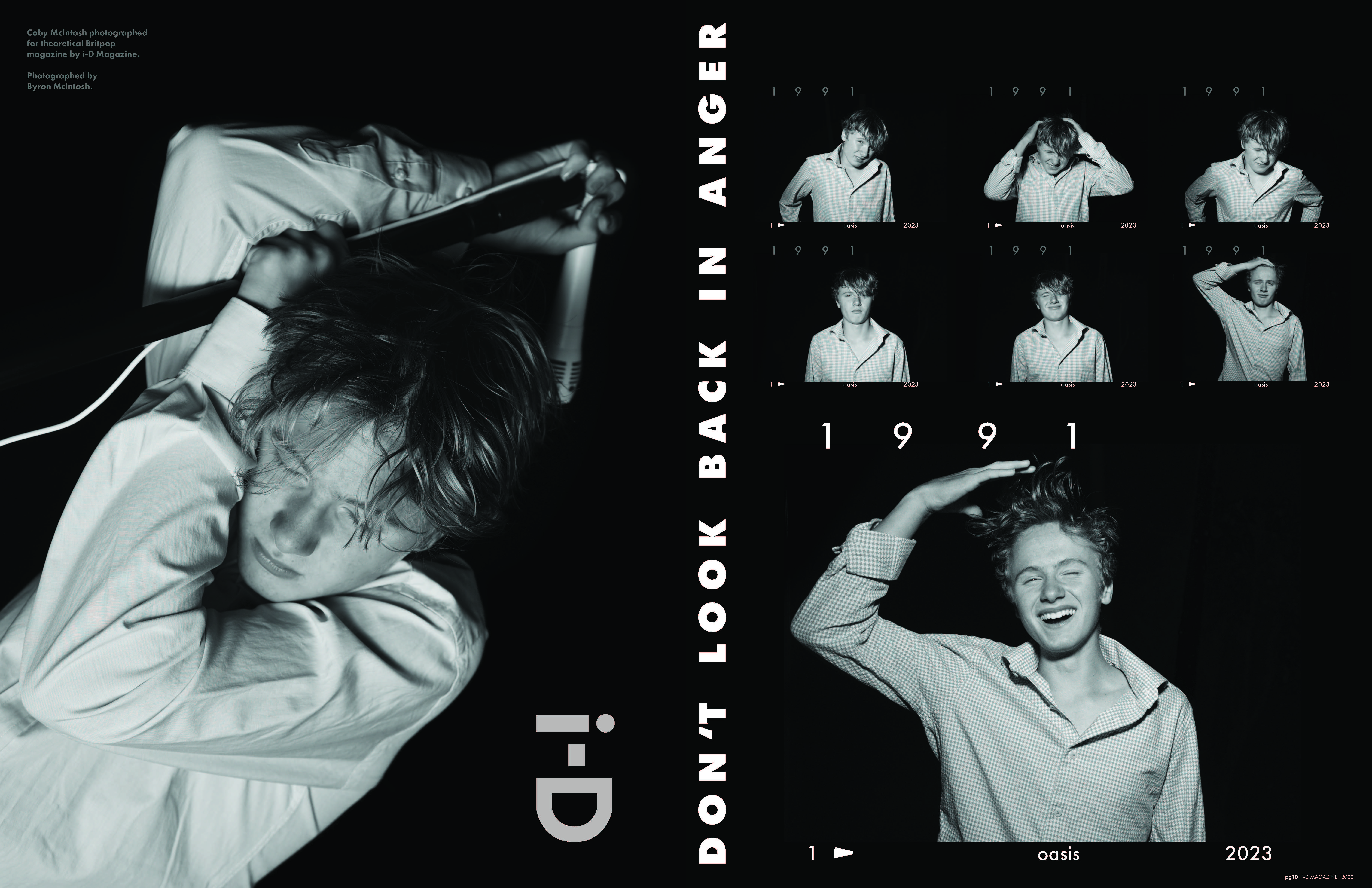
I aim to express the attitudes of the musicians in the renowned Britpop bands Oasis, Blur and Pulp during the Britpop craze in the late 1990s. To draw out Britpop’s 1990s cultural style, I aim to replicate the photographic style and techniques of the respective band’s album covers, promotional material in magazines, and candid photographs of the band’s musicians that influenced Britpop culture.
The concept of these photographs will be tailored by ID magazine’s identity and style; which focuses on the creative fields to inspire youth culture with the use of graphic design techniques and innovative typographic treatment to amplify the photograph’s cultural reference. ID magazine’s stylistic appeal accompanied by the initial late 1990s appeal of Britpop culture from English youth amplifies contemporary fashion appeal with nostalgia and creates new forms of expression.
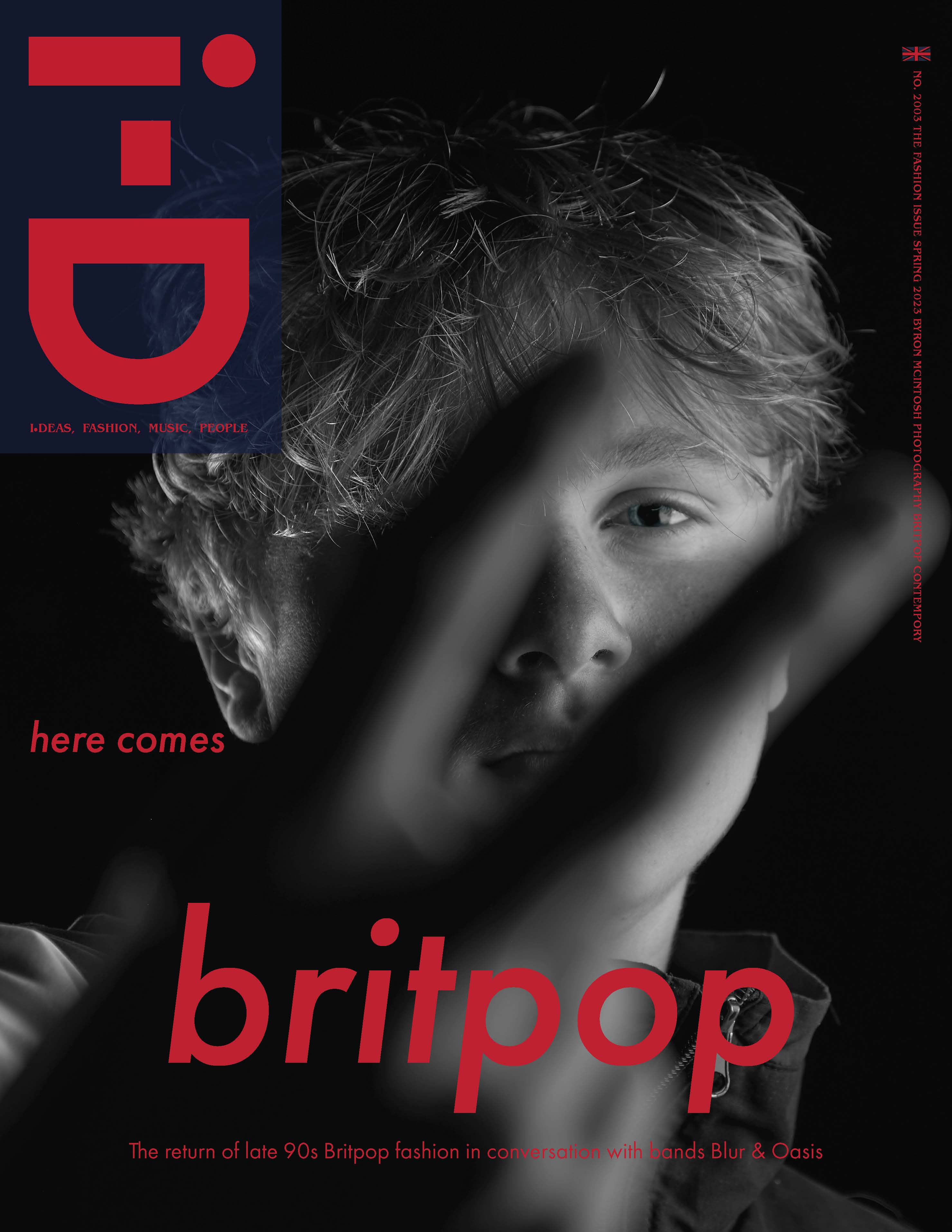
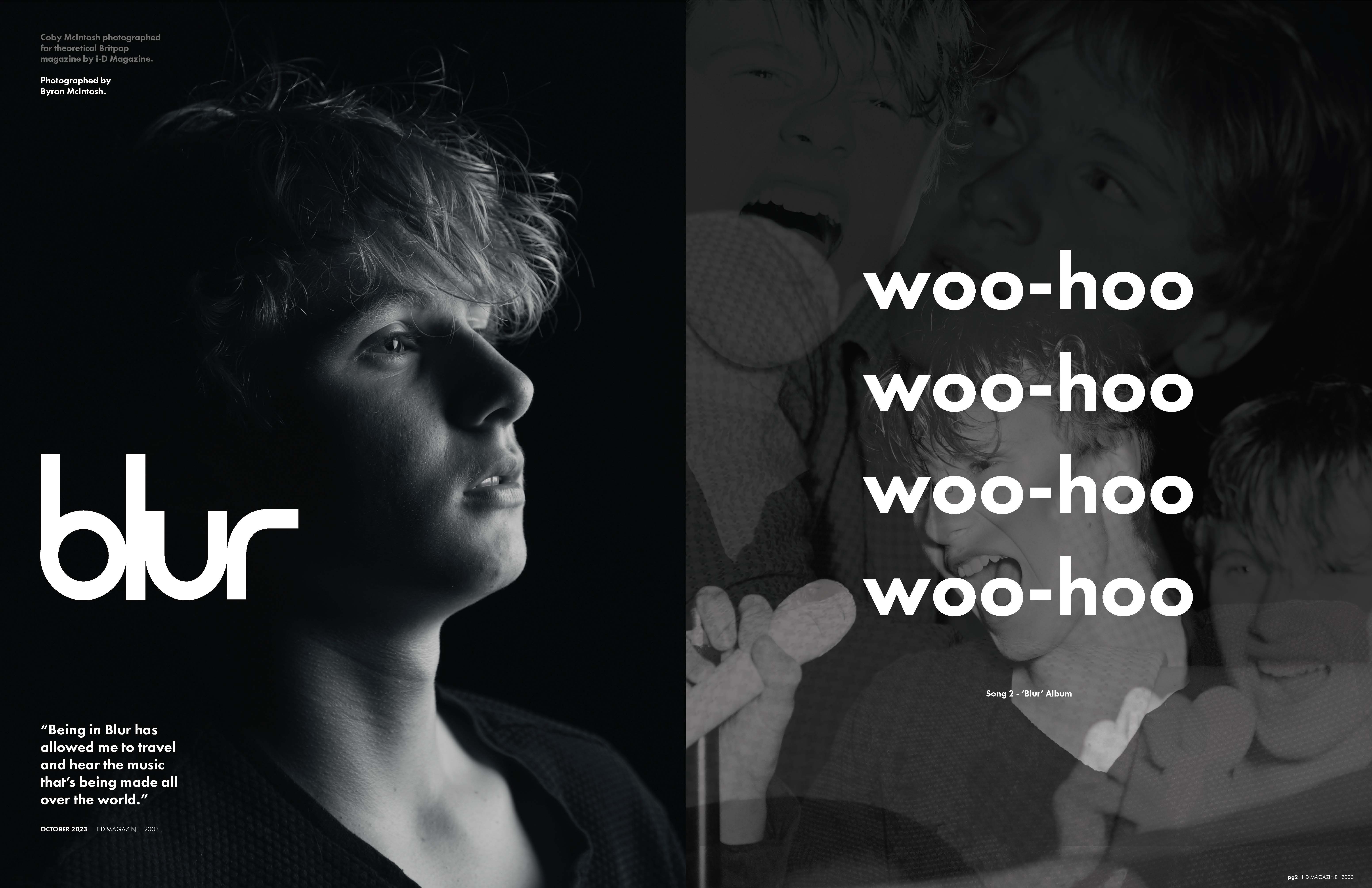


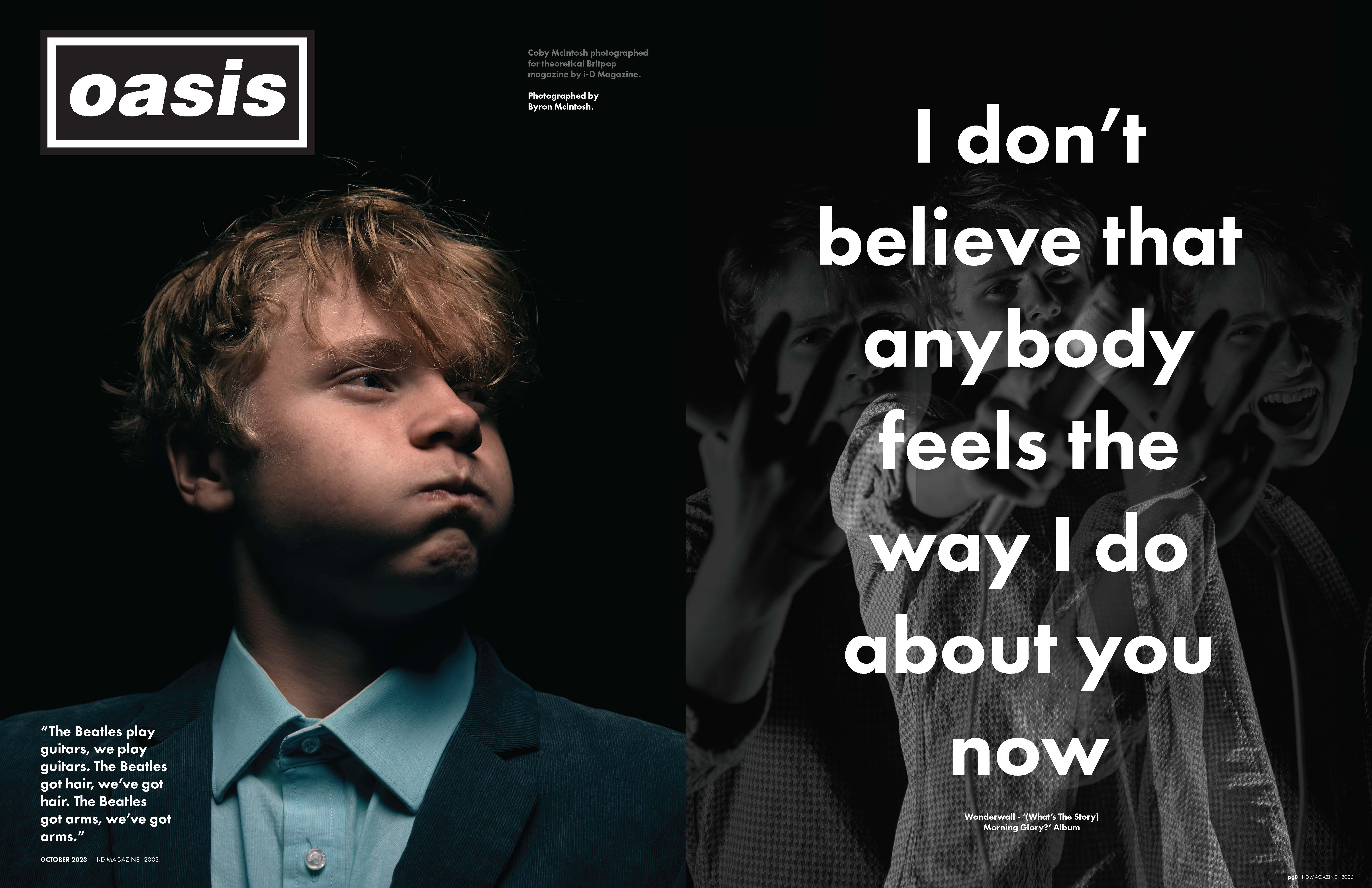
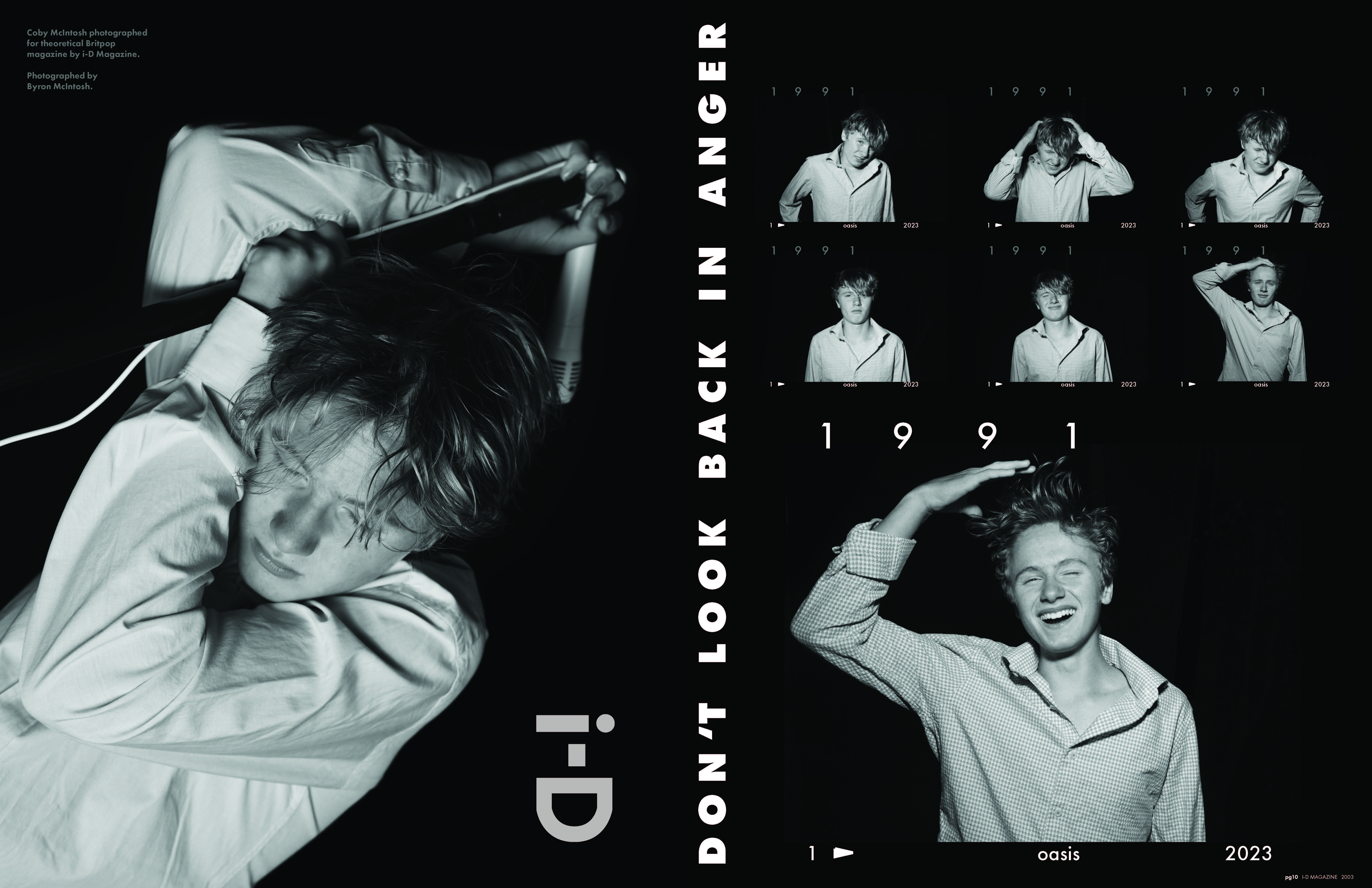


i-D magazine
The publication I’ll be using to tailor my photographic outcomes will be British-based bimonthly publication called ID Magazine.
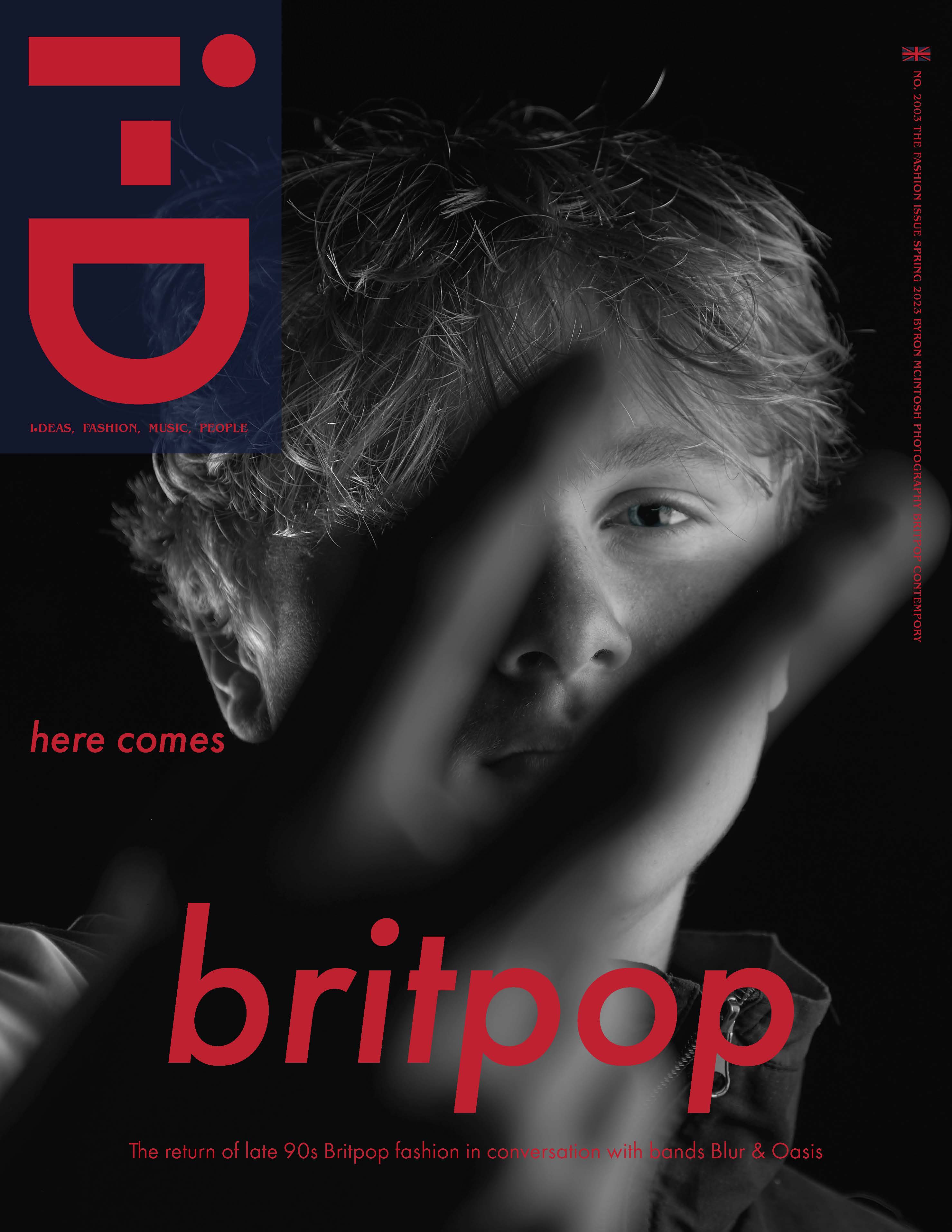
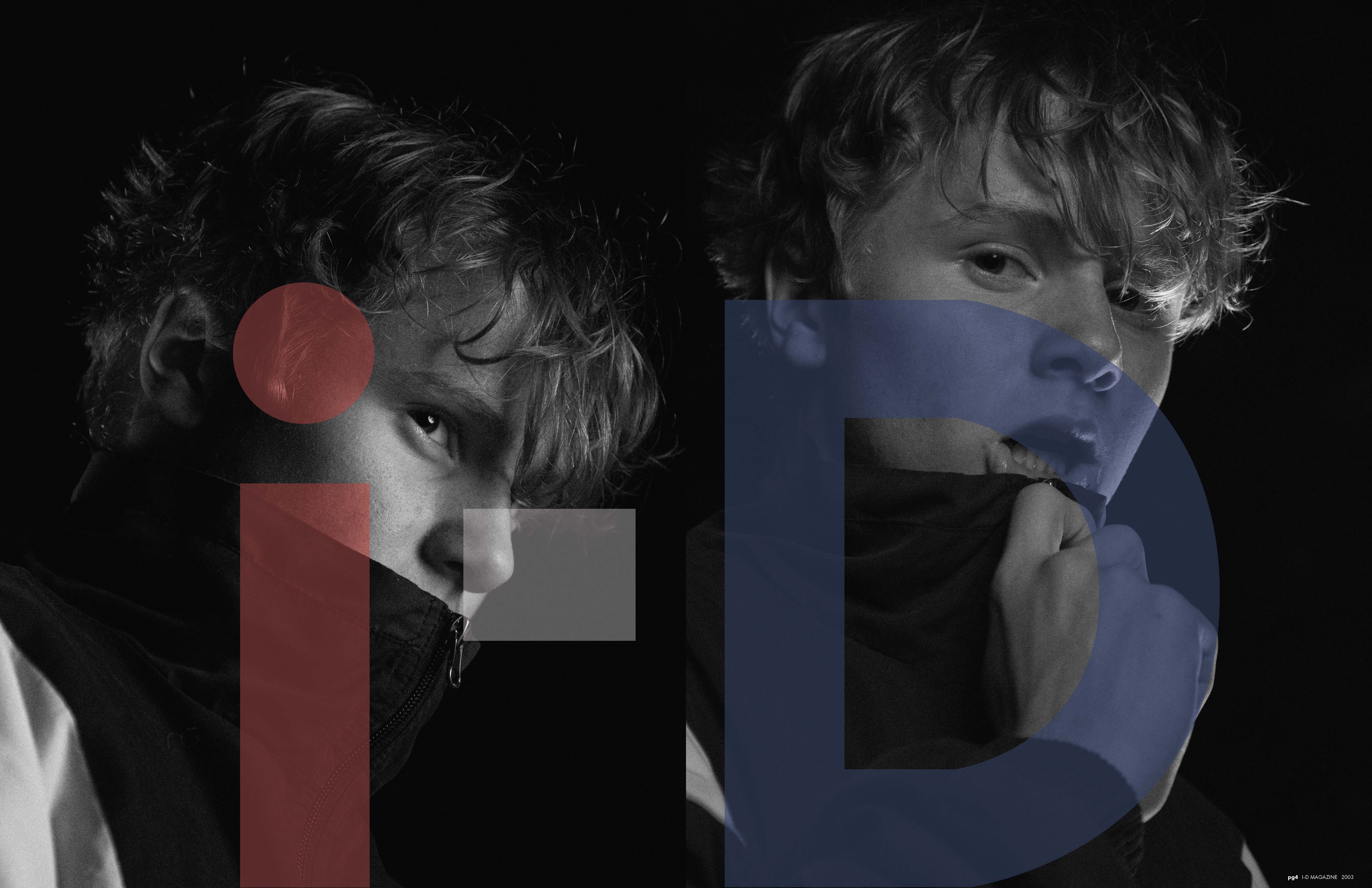
ID magazine’s photographic approach is nonchalant, in both photography, models (expression) and design to appeal to youth culture. The magazine follows the basic principles of visual treatment; however, the nonchalant style curates the creative use of innovative typography, graphics and layout to amplify the style of the magazine’s identity and cultural reference of the photograph’s context. An example of ID’s innovative typography is the use of symbolising ‘identity’ into a depiction of a face winking (I-D), which becomes a staple for the covershot.
The magazine scouts and features emerging talents in fashion, art, film, music, acting and other creative fields. Such creatives include, but are not limited to American singer-songwriter Billie Eilish’s feature in the ‘In Real Life issue’, no. 364, Autumn 2021; and American-French actor Timothée Chalamet’s feature in ‘The Superstar Issue’, no. 354, 2018.
ID magazine built its reputation on abiding by the premise of originality and steering away from imitation. They keep this principle with styling their models to either amplify the model’s career if they are a celebrity feature or a story the magazine is presenting through their visual style. For instance, a key style and ID’s signature consists of the cover model having one eye shut by winking or obstructed from view with a prop or accessory. This is a representation of the ID’s logo and identity. The style of clothing and makeup fall under the featured celebrity’s own identity, or the context of the story that’s being covered by the publication.
The nonchalant style and ID magazine’s style and identity used to focus on emerging creatives creates the opportunity to create a Britpop feature to represent the style end identity of Britpop band musicians of Oasis and Blur during their peak youth circulation/attention in the late 1990s.
Lighting
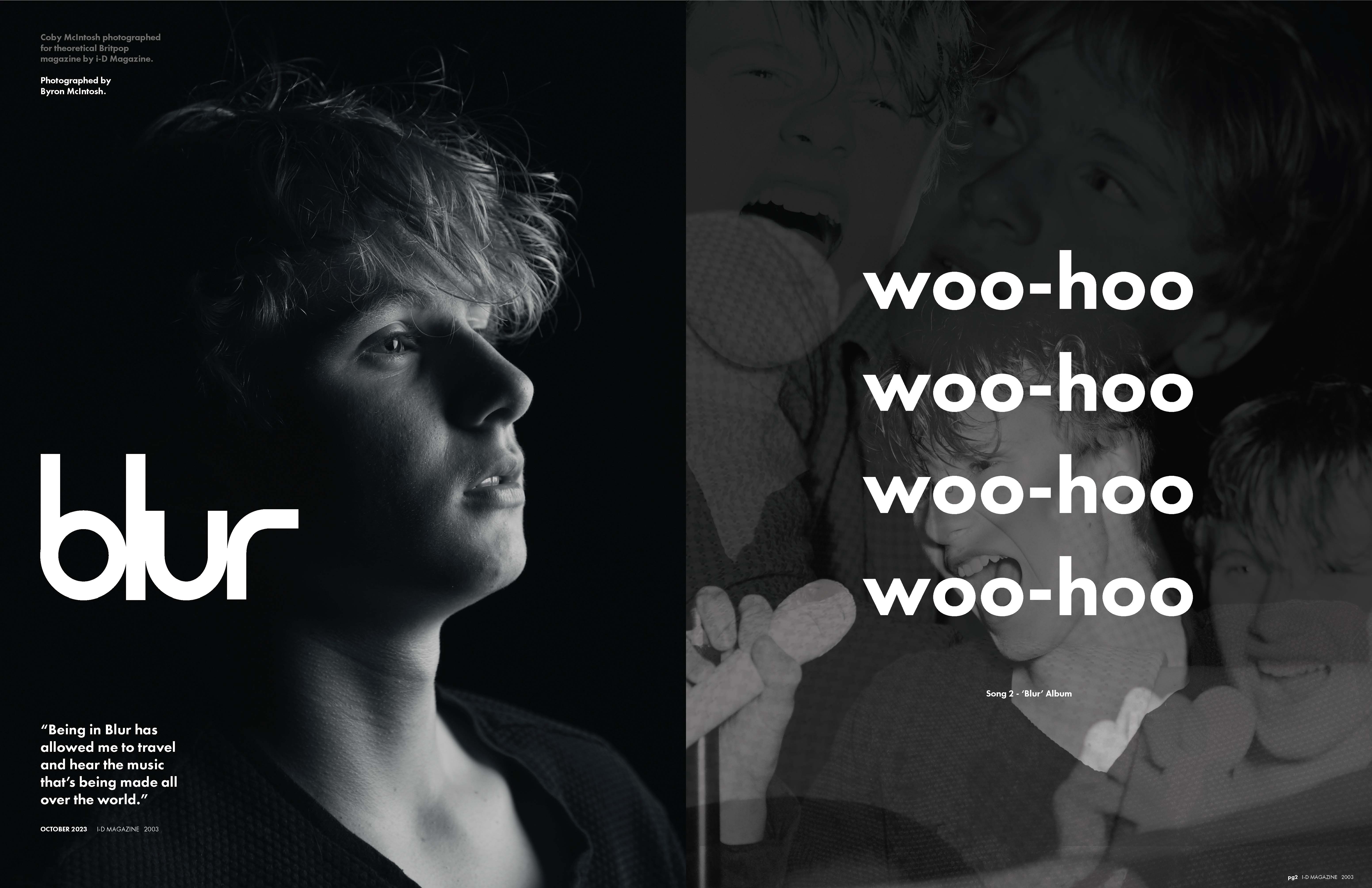
Examining the photographic techniques used by Britpop band’s promotional materials, most magazine publication covers utilise studio settings with soft lighting with one primary key light. This studio technique is most apparent in Oasis’s studio-based photographs to match the tone of their band’s identity. Another photographic technique that captures the pure expression of band members from both respective Britpop bands is candid/naturalistic shot with on-camera flash lighting during sets, gigs or out in public. Whereas Album covers incorporate either of the two techniques that best artistically express the mood of the songs in the album.
Narrative
How the attitudes and personalities of the Britpop band members of Blur and Oasis in promos and album covers influence the culture and lure of Britpop in 1990s England.
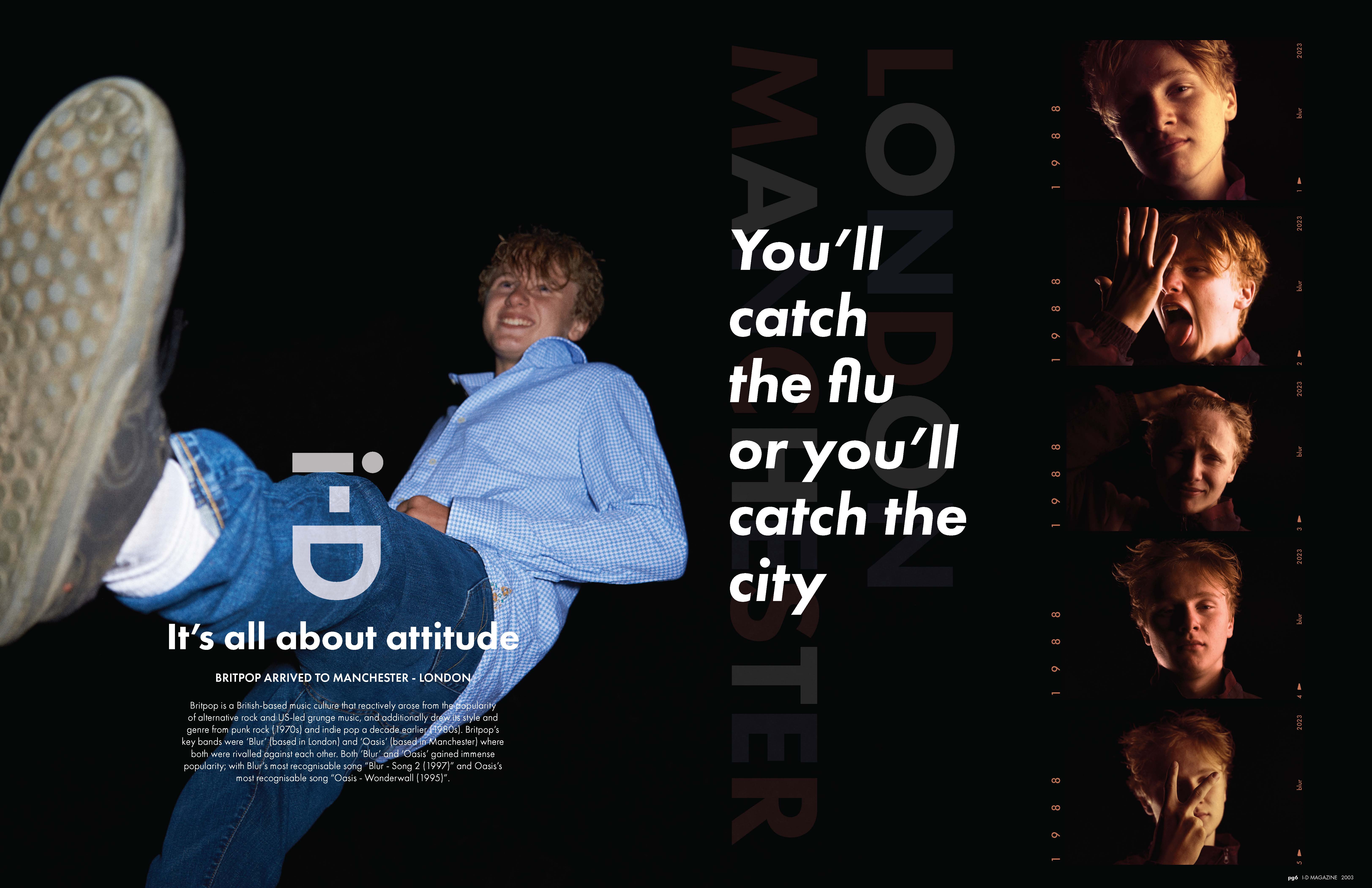
Britpop’s key bands were ‘Blur’ (based in London) and ‘Oasis’ (based in Manchester) where both were rivalled against each other. Both ‘Blur’ and ‘Oasis’ gained immense popularity; with Blur’s most recognisable song “Blur – Song 2 (1997)” and Oasis’s most recognisable song “Oasis – Wonderwall (1995)”.
The bands of Blur and Oasis had a similar take on how they built their individual personality and band identity with the musicians to intrigue their audience (late teens to late twenties) and build a large cultural identity for the Britpop genre. The band members created a distinct quality of personality that resonates and evolves from the dourness style and genre of Britpop’s predecessors Punk Rock (1970s) and Indie Pop a decade earlier (1980s). Britpop’s identity, which reflected Blur and Oasis’ musician’s personality was melodic, innovative with youthfully exuberant. I aim to express this personality of Britpop musicians within the replication of Blur and Oasis’s studio based lighting and candid on camera flash lighting seen in album covers, publications and promotional material in the 1990s.
Fashion
A big staple in Britpop was not only the music and attitudes, but how the musical culture influenced fashion in Britain during the late 1990s. Clothing worn by the general British public was typically influenced by Britpop musicians as they would wear a variety of male-dominant clothing options, depending on the band. Oasis typically leaned its fashion influence with sunglasses, button-up shirts with jackets on top accompanied with denim jeans. Blur would have an influence of polo shirts, crew neck jumpers, track jackets and denim jeans with 90s sneakers. These fashion influences were stylised as a British boyband vibe as ‘Blur’ and ‘Oasis’ members were in their late 20s during the late 90s.
What also distinguished Britpop fashion with other fashion trends were the clean-cut hairstyles that would follow a naturally fallen look. Short middle parts and mops with relatively short back and sides were mostly influenced by the band ‘Blur’ during the late 90s. Where short and long shaggy was typically styled with the band ‘Oasis’.
View the initial I-D Fashion Magazine exercise project below
Click here to view Photography

 Byron McIntosh